The Secret Recession
By John Tirpak, Executive Director and Jason Arends, Office Manager
According to the Employment Security Department, unemployment in Washington State is about the same as last year. Despite the absence of more recent data, due to either the shutdown or the firing of the previous Bureau of Labor Statistics director for releasing accurate jobs reports, country-wide unemployment claims are only up slightly. So what explains the pessimistic mood many have?
In recent months, calls to the Unemployment Law Project have increased. Every week we get hundreds of calls from people asking for help. But more and more of the calls are from people who are frustrated because they are waiting weeks and sometimes months for their claim to be processed. If this is the result of just a moderate increase in the unemployment rate, we are ill prepared for a recession.
The job market has been impacted by tariffs, the recent federal shutdown, deportations, and companies spending on AI. Mass layoffs by Verizon, Starbucks, UPS, Amazon, Microsoft, and the federal government have been in the news. If you subscribe to Worker Adjustment and Retraining Notifications (WARN), your inbox will fill up quickly with notices of permanent layoffs and closures.
Good jobs are harder to find. The number of new jobs is trending down. Job postings on Indeed.com have fallen to the lowest level since the pandemic. With new hiring being down, people are staying put. Some companies respond to this by pressuring people to quit or by looking for reasons to fire workers.
Prices are high. The median home price in Washington State is $590,000, so someone at the state’s median household income is not able to afford a home here. Grocery prices are up 5% over last year. Childcare costs in Washington State are among the highest in the nation and regularly outpace inflation. Washington is the second least affordable state in the nation for a single parent to find childcare.
The “secret recession” isn’t a secret to the people who are experiencing hardship now. This is a time when the unemployment benefits system are needed for basic survival.
Contact Governor Ferguson (governor.wa.gov) and your state legislators (leg.wa.gov) to ask them to increase staffing at the Employment Security Department. Unemployed workers in our state need your support.
Student Intern Profile
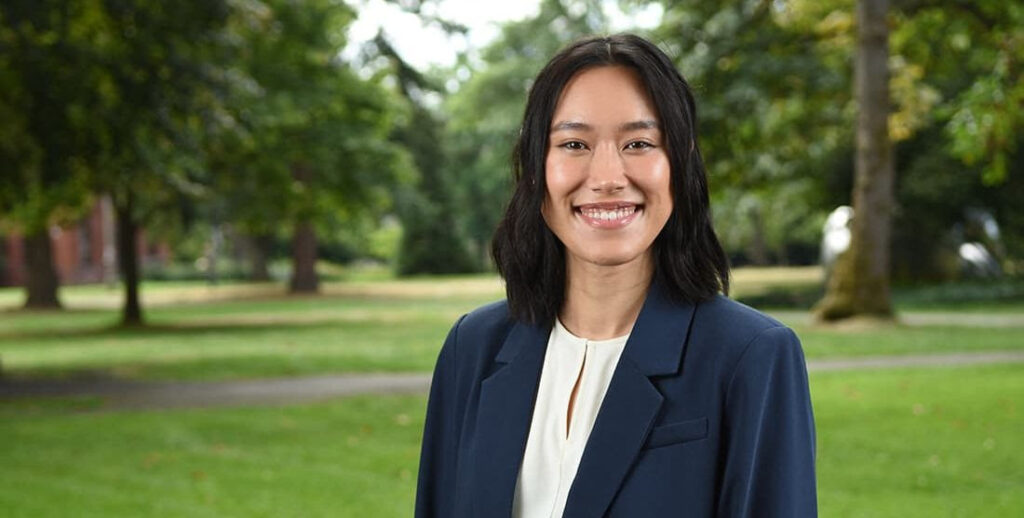
By Yoko Fedorenko, Summer Intern
This summer, as an intern at ULP, I had the honor of directly representing clients for the very first time. Before law school, I worked at a labor union, which instilled in me a passion for the struggle of workers and a real-world understanding of the collective power they hold. At ULP, I got to advocate for workers from a different angle and in the process, hopefully, help tip the scales of economic justice in favor of the more vulnerable residents of our state.
At ULP, we became acquainted with clients during times of financial uncertainty, emotional turmoil, and fear. The circumstances leading to their unemployment often included mistreatment by their bosses, mental health struggles, difficult life events, illness, or abrupt layoffs. They had often been subject to the cold ways of big corporations who cared more about profits than the human beings they employed. And then, after all that, they were faced with yet another hurdle to providing for their families: denial of unemployment benefits. As their advocates, it was up to us to approach their story with care and their case with tenacity. It was a huge responsibility, and one that I did not take lightly.
My very first client at ULP was a low-income immigrant worker who had become unemployed due to an awful family emergency and was terrified of the possibility of losing his housing. When I called to tell him, through an interpreter, that we had won his case, I heard tears in his voice as he thanked me profusely. To be able to make a tangible difference in someone’s life was a very special thing—it reminded me of the human stakes of ULP’s work and reminded me why I want to be an attorney.
Policy and Pro Bono Update
By Anne Paxton, ULP Attorney and Policy Director
The Unemployment Law Project’s policy program has been dedicated to improving state law and policy on unemployment insurance (UI) in several ways. These are some of the milestones of 2025:
The first precedential ruling testing caregiving inaccessibility as a new good cause to quit a job in Washington state
As of July 2024, employees may now have good cause to quit a job based on caregiving inaccessibility. The law, part of RCW 50.20.050(2)(a), was actively advocated by ULP for six years before winning passage in the legislature. It has been tested in various claimant appeals. But a special victory occurred March 25 in a case appealed to the Commissioner’s Review Office of the Employment Security Department (ESD): the first precedential ruling on the new law. The Commissioner found that a claimant properly established good cause to quit due to inaccessibility of childcare.
In the ruling, In Re: Lauren R. Gentry, the Commissioner agreed that the claimant met the conditions to qualify for unemployment benefits. Faced with lack of available childcare, she asked her employer for schedule changes to accommodate the lack of care and was denied. She therefore made reasonable efforts to preserve her employment—a key requirement of establishing a good cause quit—and could qualify to receive benefits.
A positive ruling from the Ninth Circuit Court of Appeal affirming a claimant’s right to benefits, subject of an amicus brief written by ULP
ULP staff served as lead counsel for an amicus brief before the Ninth Circuit Court of Appeals in a special appeal on the question of whether there is a constitutionally protected property interest in pandemic unemployment benefits. This question was important in order for the court to consider the appeal in the case Sterling v. Feek, involving a claimant overpayment, a case that is as yet unresolved. But the 9th Circuit agreed with the appellants’ and the argument made in the amicus brief (jointly filed by ULP, the National Employment Law Project, and the Oregon Law Center) that a constitutional interest does exist in Covid-19 unemployment benefits.
Continued ULP advocacy of bills to reduce unjust denials of benefits
Employees who work part-time and anyone who attends school or takes a class are among the workers whom ULP hopes to help with new laws. Two bills, introduced and considered by the legislature in 2025, will again be debated in the 2026 legislative session. One bill (SB 5540) would update state law to end disqualification from benefits for people in school or taking classes where it is not interfering with their availability to work. A second bill (SHB 1682 ) would end the requirement that most part-time workers be available for and seeking full-time work in order to collect benefits. ULP is also working on a bill to end the use of poorly defined “misconduct” to disallow waiver of an overpayment that is not the claimant’s fault.
A role in helping ESD’s overpayment waiver program lead the nation in cancelling close to $1 billion in pandemic overpayments charged to claimants
In 2025, Washington’s ESD has nearly finalized a sweeping and unprecedented initiative making amends to 213,000 people who were paid unemployment benefits during the pandemic, then found themselves hit with demands that they pay back the funds.
A similar overpayment crisis occurred in other states. In the process of navigating the complex CARES Act (passed quickly by the federal government to check the negative economic impact of the pandemic), Washington and most other states ended up retracting approval of many people’s unemployment benefits and imposing overpayments. But there was strong feeling that people should not be financially ruined when the overpayments were not their fault. ULP helped efforts toward a solution by demonstrating that, in our state, many overpayments were caused by misinterpretation of certain federal rules, which was confirmed by the U.S. Department of Labor.
The successful waiver campaign that resulted, citing standards of equity and good conscience, has now cancelled overpayments totaling to $953 million for 213,000 workers. Those who had already made payments on their overpayments were refunded what they had paid. We believe this is the largest-scale effort among all the states to correct the harm from imposing unwarranted overpayments during the pandemic.
ULP’s training sessions in unemployment law and representing claimants now formally a WSBA CLE
This year, ULP conducted our first continuing legal education (MCLE) panel on the basics of unemployment law and how to represent a claimant at hearing. Panel member Dan Hayward, a former administrative law judge, joined two ULP attorneys to provide his unique perspective on the hearing process. The panel discussion was recorded and will soon be available on demand to members of the Washington State Bar Association (WSBA) members for 3 credits of law and legal continuing education. For pro bono volunteers who assist ULP with cases, this CLE will be available on demand from WSBA at no charge.
Bar News highlights ULP’s pro bono work
ULP was honored to be featured as Pro Bono Organization of the Month in the Washington State Bar Association Bar News in November 2025. The “Conversation with the Unemployment Law Project” described how ULP volunteers’ advocacy has long helped claimants with a disability, limited English, scant resources, or other challenges access benefits after they have been denied.
Thanks from the Director
By John Tirpak, Executive Director
We wish to thank the Legal Foundation of Washington, the Office of Civil Legal Aid, and King County for their ongoing support for the work of the Unemployment Law Project.
Thanks to labor unions across the state for their collaboration and generous donations.
We wish to thank Stoup Brewing on Capitol Hill in Seattle for hosting Brew Review this year. Thanks to council members Teresa Mosqueda and Alexis Rinck for their rousing speeches at the event. Special thanks to the generous event sponsors, auction donors, and all the enthusiastic attendees that made the event a great success.
Special thanks to Jen Barnes, Queen Sativa, and Rough & Tumble Pub for the wonderful Halloween Drag Bingo and Costume Contest event.
Extra special thanks to union attorney Andy Paroff for his graphic design and publicity work for ULP events. His work has been invaluable in making our events great successes.
We wish to thank all of the students and volunteer attorneys that we have worked with ULP in the past year. With your help we were able to help more than 500 people around the state with advice and representation.
Special thanks to the ULP Board for their ongoing dedication and generosity.